
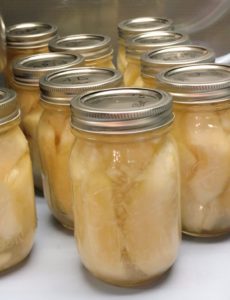
 Canning fruit is a time-honored tradition that allows families to enjoy the flavors of summer all year long. From peaches and pears to cherries and apples, properly canned fruit can provide not only a sweet treat but also a safe and nutritious addition to the pantry. While canning may seem straightforward, it is important to follow proper methods to ensure food safety and preserve flavor, texture, and color.
Choosing the Right Fruit
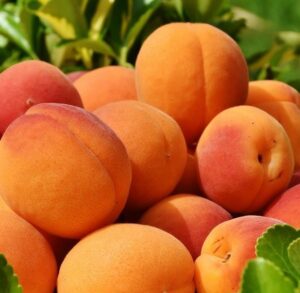 The first step to successful canning is starting with high-quality produce. Select fruit that is ripe but not overripe. Underripe fruit can lack flavor, while overly soft fruit may break apart during processing. Always wash fruit thoroughly, removing stems, pits, cores, or skins as the recipe requires. Peeling fruits like peaches or pears can be made easier by briefly dipping them into boiling water, then transferring them to ice water to loosen the skins.
Preparing the Jars and Equipment
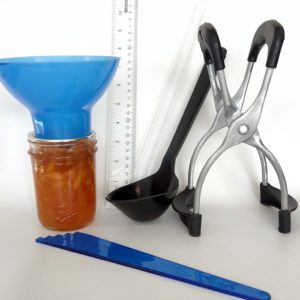 Choosing the proper canning equipment such as mason jars, 2 piece canning lids is just as important as the process of preparation. Wash jars, lids, and bands in hot, soapy water and rinse well. Jars should be kept hot until they are filled. This can be done by placing them in simmering water. Lids should be prepared following the manufacturer’s directions. A canning funnel, jar lifter, and bubble remover are helpful tools to make the process smoother and safer.
Hot Pack vs. Raw Pack Methods
There are two common methods for filling jars with fruit: hot pack and raw pack.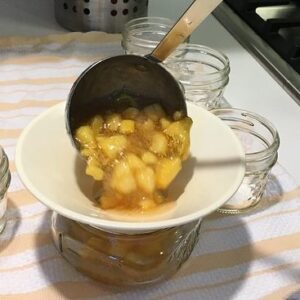
-
Hot pack involves briefly cooking fruit in boiling water, syrup, or juice before packing it into jars. This method reduces air in the fruit, helps maintain better color and texture, and usually results in higher-quality canned fruit.
-
Raw pack means packing raw fruit directly into jars and then covering it with hot syrup, water, or juice. While this method is faster, it often leads to floating fruit and less vibrant color over time.
Canning Fruit Liquid
Canned fruit is often preserved in syrup, though water or fruit juice can also be used. Syrups can range from very light to heavy, depending on taste preference. Using lighter syrups or juice reduces added sugar and allows the natural sweetness of the fruit to shine through. Always ensure fruit is completely covered with liquid, leaving the recommended headspace to allow for expansion during processing.
Processing and Sealing
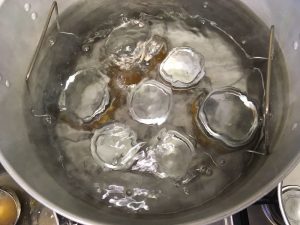 Fruits are considered high-acid foods, which means they can be safely processed using a boiling water canner. After filling jars and wiping the rims clean, lids and bands are applied, and jars are placed in boiling water with at least one to two inches of water covering the tops. Processing times vary depending on the type of fruit, jar size, and elevation. Following tested, reliable recipes is essential to ensure food safety. Read your recipe to ensure that your processing time includes elevation adjustments.
Cooling and Storing
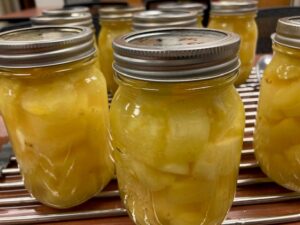 Once processing is complete, jars should be carefully removed and placed on a towel to cool undisturbed for 12–24 hours. As they cool, lids should seal with a distinct “pop.” Any unsealed jars should be refrigerated and used promptly. Sealed jars should be washed, rings removed, and labeled with the date. Store jars without rings in a cool, dark place. For best quality, use canned fruit within one year.
Canning fruit properly combines both science and tradition. By selecting quality produce, following safe preparation steps, and processing correctly, you can create jars of delicious fruit that your family can enjoy throughout the year. With a little care and attention, the sweetness of the harvest can be preserved well beyond the season.