
 Picky eating is a common challenge in childhood. This behavior can cause considerable stress for parents and caregivers. It can also have a negative impact on family relationships. This phase is often outgrown. Here are some practical strategies that can make mealtimes more manageable and fun.
Be Patient and Persistent
Continue offering a variety of foods prepared in different ways, for example, raw vegetables with dip, cooked, in a casserole, etc. It may take up to 20 exposures before a child accepts a new food. Sometimes it can take longer before they begin to enjoy a particular food. Unfortunately, parents often give up after 3–4 times because of mealtime stress. Do not force eating. Instead encourage them to try new foods. Forcing a child to eat can create negative associations with food and potentially worsen fussy eating habits.
Involving Children in Meal Planning and Preparation
Involvement in meal planning and preparation can increase a child’s interest in trying new foods.
- Look at recipes together
- Try new and different foods
- Go shopping for food together
- Grow a garden
- Have a tasting party
- Offer a wide range of flavors and textures
- Model an adventurous behavior that you want to see from your children
Talk with your children about meal planning and their favorite foods. Consider asking them these questions before you shop for the week: What should we have for dinner this week? Allow them to choose one meal, within reason. What are your favorite vegetables? How do you prefer them cooked? Some older children will be able to tell you how they like a certain food prepared, e.g. broccoli roasted versus steamed. If they are younger, you might ask them if they like their broccoli crunchy versus soft. Be sure to include these items for the week and point out to your child when you are doing so. They may feel empowered just knowing they had a say in what was prepared for the week.
Preparing Food for a Picky Eater
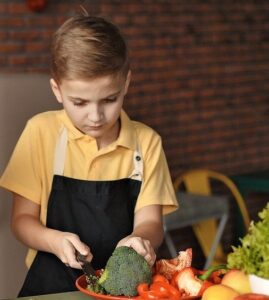 When it comes time to preparing the food, ask your child if they want to help you prepare it, offering them a simple task such as tearing the lettuce, mixing a dressing, or mashing the potatoes. This, too, may make them more likely to try and accept the food they are helping prepare.
When mealtime comes along, offer a small portion of a new food alongside a familiar favorite. This can be a useful technique for getting children to try new foods. This way, children build on the familiar and preferred foods they know best. Avoid the temptation to return to the stove and cook foods that you know your child will eat. If your child does not like or doesn’t seem to be eating the food that you have prepared for a meal or snack, just say to them “that’s OK” and let it be.
Tips for Success
- Cut food into fun and easy shapes with cookie cutters

- Encourage your child to invent and help prepare new snacks
- Create new tastes by mixing two or more food groups together
- Name a food your child helps create. For example, make a big deal of serving “Maria’s Salad” or “Peter’s Sweet Potatoes” for dinner.
While picky eating is classified as someone with a strong preference or aversion to specific foods, remember this is a short phase and can be outgrown. Picky eating can be a normal part of many children’s development, so rest assured that it is common and can go away over time.


I like your suggestions. Thanks Jaci!